The light was wrong.
KAYVA exists because we could not buy the light we wanted. So we built it.
Labelled CRI 90. Measured CRI 80.
What we found
Bulb after bulb, strip after strip, the pattern repeated: "high CRI" on the listing, Ra80-something on the meter. In a market where nobody checks, nobody has to tell the truth.
We had just finished renovating our home. Warm oak floors, a leather sofa we had saved for, paint colours chosen over three weekends. Under the downlights, all of it looked flat. The oak went grey. The leather lost its depth.
The bulbs were the problem. They were labelled CRI 90. We tested them — CRI 80.
So we went looking for the real thing.
KAYVA exists because we could not buy the light we wanted. So we built it.
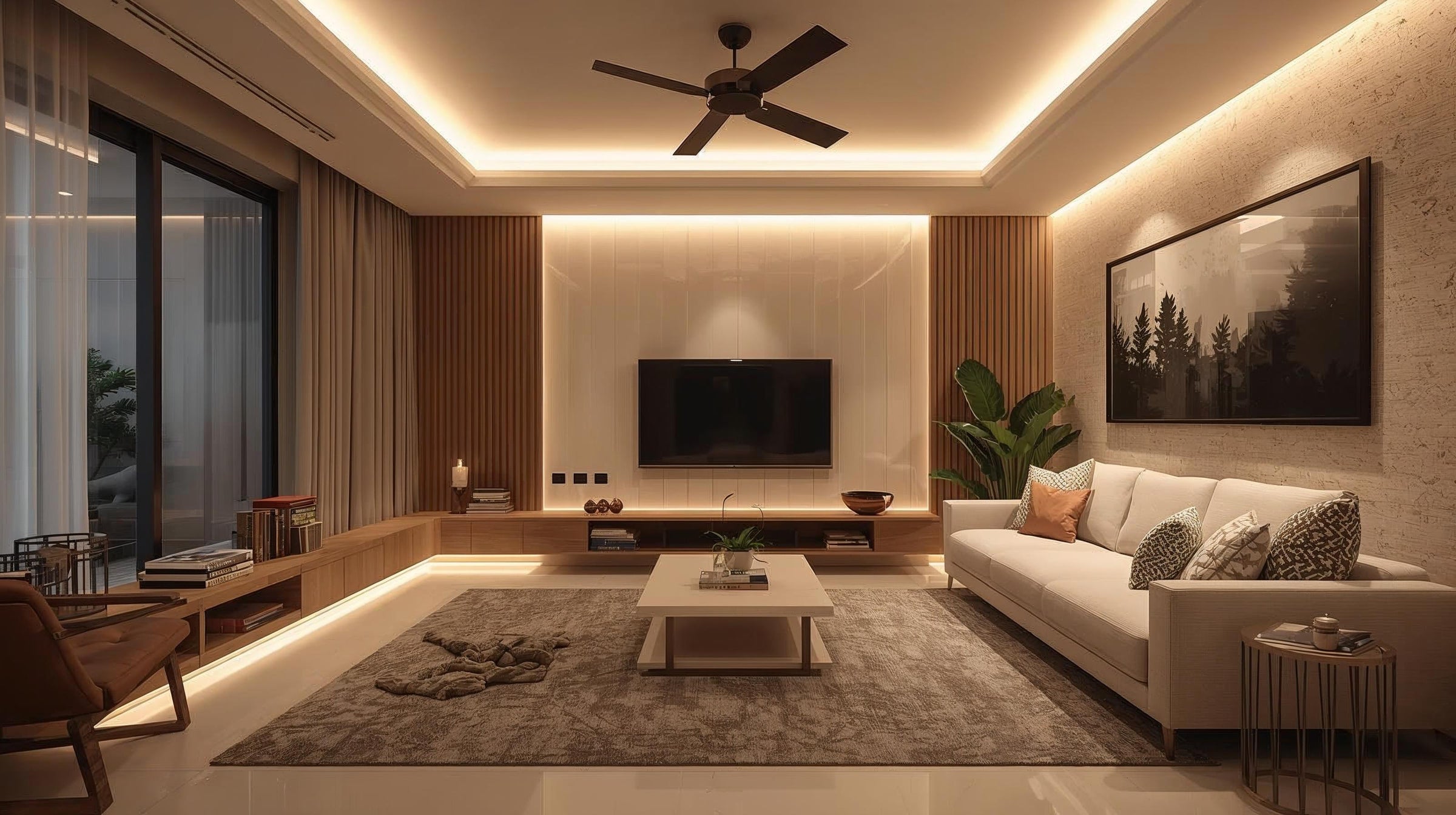
What Ra95+ actually means.
CRI measures how faithfully light renders colour, on a scale to 100. Most LED lighting sold in Singapore sits at Ra80 — the point where reds dull, wood flattens and skin tones turn grey. Ra95+ is the standard museums and galleries specify, because at that level, things look the way they actually are.
Every KAYVA product is Ra95+ with R9 above 50 — R9 being the red rendering most brands leave unpublished, because it is the hardest to get right. We publish it, and every spec we publish is tested on every batch — factory reports plus our own spectrometer. If we cannot measure it, we do not print it.
Ra95+
Every product
R9 > 50
Published, not hidden
Every batch
Tested, not sampled
High CRI costs lumens.
A Ra95+ bulb produces less raw brightness than a Ra80 bulb of the same wattage. We think that trade is worth making — you renovated for colour and texture, not for lux readings. But you should know it exists. That is the kind of brand we are trying to be.
Read why CRI mattersThe Range